Why Every Chicago Business Needs an AED in 2026–2027
Protecting Employees, Customers, and Visitors Before Emergency Medical Services Arrive
When most businesses think about workplace safety, they think about fire extinguishers, first aid kits, emergency exits, and employee safety training. However, one lifesaving piece of equipment is often overlooked: the Automated External Defibrillator (AED).
As we move through 2026 and prepare for 2027, Chicago businesses should be asking an important question:
If someone experienced sudden cardiac arrest in our workplace today, would we be prepared to respond?
At Chicago CPR Academy, we work with businesses, schools, healthcare facilities, fitness centers, and organizations throughout Chicago and the surrounding suburbs to improve emergency preparedness through CPR, AED, and First Aid training.
As a company owned and operated by a firefighter/paramedic, we understand the importance of immediate action during a cardiac emergency.
The reality is simple: An AED can help save a life, but only if one is available, properly maintained, and used quickly.
What Is an AED and Why Is It Important?
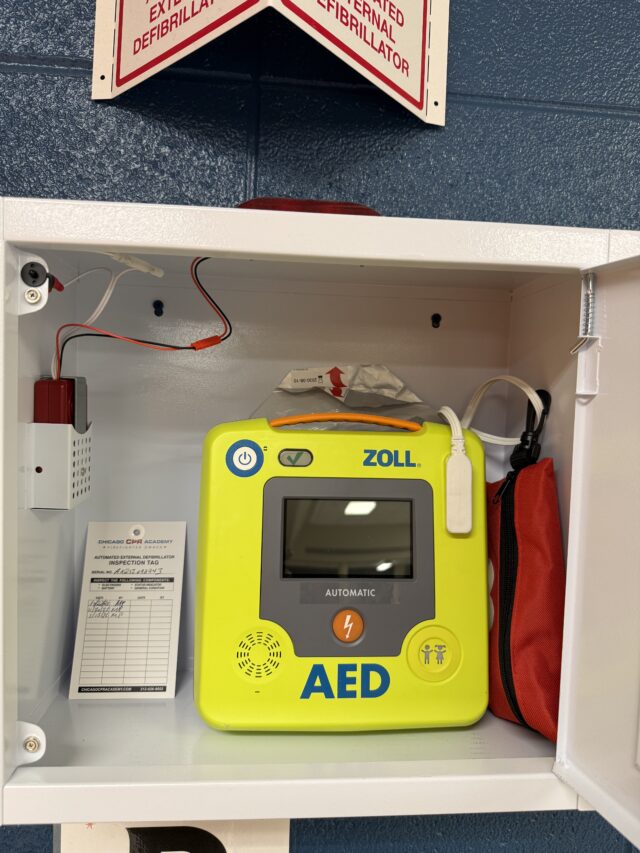
An Automated External Defibrillator (AED) is a portable medical device designed to analyze a person’s heart rhythm and deliver an electrical shock when certain life-threatening rhythms are detected.
During sudden cardiac arrest, the heart unexpectedly stops pumping blood effectively. Without immediate intervention, the brain and other vital organs are deprived of oxygen.
An AED can identify shockable heart rhythms, including ventricular fibrillation and certain forms of ventricular tachycardia, and deliver a shock to help restore an effective rhythm.
Modern AEDs are designed to be used by everyday people, not just healthcare professionals.
Most devices provide:
- Clear voice instructions guiding the rescuer through each step.
- Automatic analysis of the person’s heart rhythm.
- Visual prompts for proper electrode pad placement.
- Safety features that prevent a shock when one is not advised.
- Instructions to continue CPR when necessary.
An AED will not deliver a shock unless its analysis determines that a shockable rhythm is present.
You do not need to be a firefighter, paramedic, nurse, or physician to use an AED during an emergency.
However, hands-on CPR and AED training helps employees become more confident and prepared to act.
Sudden Cardiac Arrest Can Happen Anywhere — Including at Work
According to the American Heart Association, more than 350,000 adults experience out-of-hospital cardiac arrest in the United States annually.
Unfortunately, survival rates remain low.
Data highlighted in the American Heart Association’s 2026 Heart Disease and Stroke Statistics Update show that survival to hospital discharge following out-of-hospital cardiac arrest was approximately 10.5% in 2024.
Cardiac arrest can happen without warning, including in individuals who have no known history of heart disease.
Imagine an employee suddenly collapsing in an office, a customer becoming unresponsive at a retail store, or a visitor experiencing cardiac arrest inside a Chicago commercial building.
Would anyone know what to do?
Would employees know where the nearest AED was located?
Would the AED be ready to use?
These questions highlight why emergency preparedness should be a priority for businesses of all sizes.
Why Every Minute Matters During Cardiac Arrest
When someone experiences sudden cardiac arrest, immediate CPR and rapid access to an AED are critical.
CPR helps circulate oxygenated blood to the brain and other vital organs until more advanced treatment becomes available.
An AED can deliver a lifesaving shock when the cardiac arrest involves a shockable heart rhythm.
The American Heart Association reports that immediate CPR can double or even triple the chance of survival following out-of-hospital cardiac arrest.
However, CPR alone cannot always correct the electrical disturbance responsible for cardiac arrest.
This is why having an AED readily accessible is so important.
Even in communities served by highly trained firefighters, paramedics, and emergency medical personnel, it takes time for emergency responders to reach a patient.
The actions taken by employees, coworkers, or bystanders during those first few minutes can make the difference between life and death.
Businesses should never assume that calling 911 is the only action needed during a cardiac emergency.
Calling 911, starting CPR, and retrieving an AED should happen as quickly as possible.
Are AEDs Required in Illinois Workplaces in 2026–2027?
One of the most common questions business owners ask is whether they are legally required to have an AED.
The answer depends on the type of business or facility.
Illinois has laws requiring AEDs in certain settings, including qualifying physical fitness facilities. These facilities also have requirements involving trained AED users and device maintenance.
Other facilities, including certain healthcare and long-term care settings, may have their own AED requirements.
For example, an Illinois law effective January 1, 2026, requires facilities covered under the Nursing Home Care Act to have an AED and related policies and procedures, with a compliance deadline of January 1, 2030.
For most general office and commercial workplaces, however, there is no universal federal OSHA requirement that every business install an AED.
OSHA does encourage AED availability in workplaces as part of emergency preparedness.
Even when an AED is not legally required, businesses should consider whether having one would improve their ability to respond to a cardiac emergency.
Illinois AED owners also have responsibilities under state law, including maintaining and testing devices according to manufacturer guidelines, addressing anticipated-rescuer training, and notifying the local emergency dispatch system about the device.
Business owners should review the requirements that apply to their particular location and industry rather than assuming that all Illinois workplaces follow the same rules.
Which Chicago Businesses Should Have an AED?
Although AEDs may not be mandatory in every workplace, many organizations would benefit from having one accessible.
Examples include:
Corporate Offices and Commercial Buildings
Large offices, multi-story buildings, corporate headquarters, and shared workspaces may have substantial numbers of employees and visitors.
An AED should be easy to locate and retrieve during an emergency.
Hotels and Hospitality Businesses
Chicago welcomes millions of visitors for conventions, business travel, sporting events, and tourism.
Hotels, conference centers, and entertainment venues should evaluate AED accessibility as part of their emergency preparedness plans.
Manufacturing Facilities and Warehouses
Industrial environments often have large floor plans, multiple shifts, and employees working across different areas.
Businesses should consider AED locations that allow for rapid retrieval throughout the facility.
Schools, Daycares, and Educational Facilities
Educational facilities should review their applicable AED requirements and emergency action plans, including accessibility during athletic activities and after-school events.
Fitness Centers and Recreational Facilities
Exercise-related emergencies are an important consideration for gyms, fitness studios, and recreational facilities.
Qualifying Illinois physical fitness facilities must comply with specific AED requirements.
Restaurants and Retail Businesses
Restaurants, stores, and shopping centers may serve significant numbers of customers each day.
Having trained employees and accessible AED equipment can help improve emergency readiness.
Buying an AED Is Only the First Step
Purchasing an AED is an important investment, but simply hanging a device on the wall does not create a complete emergency response program.
Businesses should also develop procedures to ensure their AED remains accessible, functional, and ready for use.
Important AED management responsibilities include:
1. Routine AED Inspections
AEDs should be inspected according to the manufacturer’s recommendations.
Inspections may include checking the device’s status indicator, verifying that necessary accessories are present, and confirming that the unit is accessible.
2. Battery and Electrode Pad Replacement
AED batteries and electrode pads have manufacturer-specified service lives or expiration dates.
Expired accessories can prevent a device from functioning properly when it is needed.
3. Employee CPR and AED Training
Employees should know how to recognize cardiac arrest, activate emergency services, perform CPR, and use an AED.
Training should include hands-on practice so employees are familiar with the equipment before an emergency occurs.
4. Proper AED Placement
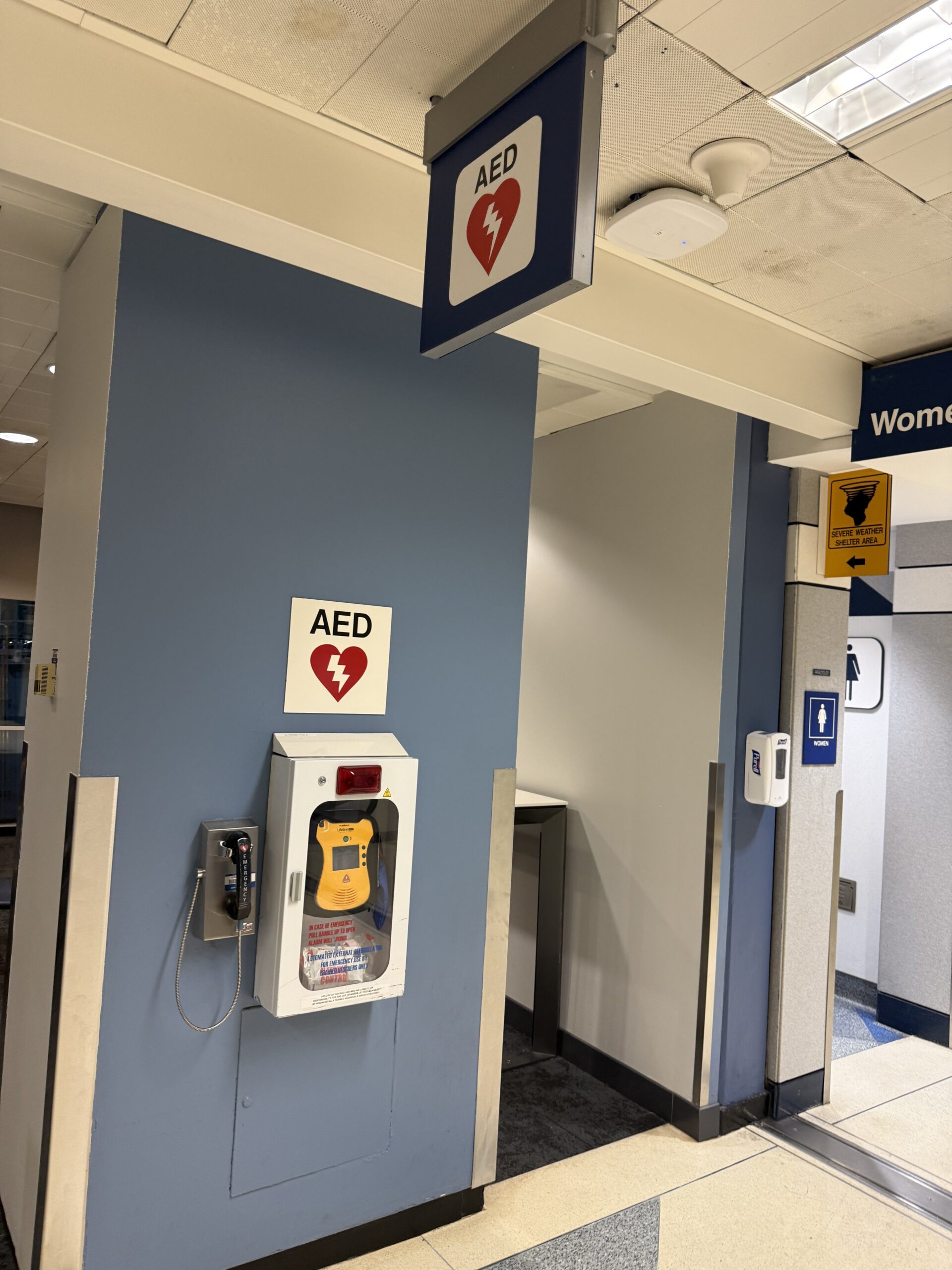
AEDs should be clearly marked, visible, and accessible during operating hours.
Larger buildings or facilities with multiple floors may benefit from having more than one AED.
5. Emergency Action Planning
Businesses should establish clear emergency response procedures.
Employees should know who will call 911, who will retrieve the AED, who will begin CPR, and how emergency responders will be directed to the patient.
A well-planned response can reduce confusion during a stressful emergency.
How Many AEDs Does Your Business Need?
There is no single number that works for every workplace.
The appropriate number of AEDs depends on several factors, including:
- Building size and number of floors.
- Number of employees and daily visitors.
- Distance between different work areas.
- Security doors and restricted access points.
- Business operating hours.
- Specific regulatory requirements.
For example, a small single-floor office may have different needs than a large manufacturing facility or multi-building corporate campus.
The goal should be to make an AED available quickly enough to support early defibrillation.
Businesses should evaluate how long it would realistically take an employee to locate, retrieve, and bring an AED to someone experiencing cardiac arrest.
Preparing Your Chicago Workplace for 2027
As businesses review their safety procedures and budgets for the upcoming year, AED preparedness deserves attention.
A simple workplace AED readiness assessment can help identify gaps before an emergency occurs.
Ask yourself:
- Does our workplace currently have an AED?
- Do employees know where it is located?
- Is the device accessible during every operating shift?
- Are batteries and electrode pads current?
- Are we following the manufacturer’s maintenance recommendations?
- Do employees receive CPR and AED training?
- Do we have an emergency response plan?
- Have we reviewed applicable Illinois AED requirements?
If your organization cannot confidently answer these questions, it may be time to review your emergency preparedness program.
Chicago CPR Academy: CPR Training and AED Solutions for Local Businesses
At Chicago CPR Academy, our mission is to help individuals and organizations develop the skills and confidence to respond during medical emergencies.
Our firefighter- and healthcare-professional-led training programs focus on practical, hands-on instruction that employees can apply in real-life situations.
We offer:
- On-Site CPR and AED Training: Convenient workplace training brought directly to your business.
- First Aid Certification: Training covering common medical emergencies and workplace injuries.
- AED Sales and Placement Assistance: Helping businesses identify appropriate AED equipment and locations.
- AED Inspection and Management Services: Supporting ongoing AED readiness, maintenance tracking, and replacement planning.
- Emergency Response Planning: Helping organizations evaluate their existing medical emergency procedures.
We proudly serve businesses throughout Chicago, Northbrook, Glenview, Evanston, Skokie, Des Plaines, Arlington Heights, Schaumburg, Highland Park, Deerfield, and surrounding communities.
Whether your organization needs its first AED or already has multiple devices requiring oversight, we can help improve your emergency readiness.
Final Thoughts: Make AED Preparedness a Priority in 2026–2027
No business owner expects a cardiac emergency to happen at their workplace.
However, sudden cardiac arrest can happen to employees, customers, visitors, and members of the public without warning.
Having an accessible AED, properly trained employees, and a clear emergency response plan can make a meaningful difference.
An AED is more than a piece of safety equipment. It is an opportunity to give someone a better chance of surviving cardiac arrest.
As we enter 2027, consider making AED readiness part of your organization’s workplace safety goals.
Is Your Workplace Prepared for a Cardiac Emergency?
Chicago CPR Academy can help your business evaluate its AED needs, schedule CPR and AED training, and develop a more comprehensive emergency preparedness program.
Contact Chicago CPR Academy today to discuss workplace CPR training, AED sales, inspections, or ongoing AED management services.
Visit www.chicagocpracademy.com to learn more.
Latest Blog Posts:
-
Hilton Chicago/Magnificent Mile Hotel On-Site Workplace CPR & AED Training
March 10, 2024 -
Why Every Chicago Business Needs an AED in 2026–2027
October 14, 2026 -
CPR Classes in Northbrook and Chicago: Two Convenient Locations for CPR, AED, First Aid & BLS Certification
October 7, 2026 -
Hands-Only CPR: How You Could Save a Life Before Paramedics Arrive
July 13, 2026 -
On-Site BLS Training for Urgent Care Clinics in Buffalo Grove: CPR & AED Readiness
January 20, 2026 -
Why I Started Chicago CPR Academy — And the Moment That Changed Everything
April 3, 2026 -
Heat Stroke vs. Heat Exhaustion: How to Stay Safe in Chicago’s Extreme Heat
June 25, 2025 -
At-Home CPR Classes: A Life-Saving Skill Every Family Should Have
March 21, 2026 -
Boost Workplace Safety with On-Site CPR & AED Training by Chicago CPR Academy
February 19, 2024 -
Why Every Minute Matters: Why Chicago Residents Should Know CPR Before EMS Arrives
July 18, 2026 -
The Importance of CPR: Understanding the Life-Saving Benefits of Cardiopulmonary Resuscitation.
November 18, 2023 -
Commotio Cordis; How it can happen to healthy athletes like Damar Hamlin
November 17, 2023 -
The Vital Importance of Comprehensive CPR, AED, and First Aid Training in Child Care Facilities: Meeting DCFS Standards
November 9, 2023 -
Heart Attack V.S Cardiac Arrest
November 17, 2023 -
The Tragic Consequences of Neglecting In-Flight Medical Equipment: A Wake-Up Call for Airlines
March 29, 2023 -
Ensuring Safety: Why Chicago Schools Must Prioritize CPR & AED Training for Staff
July 29, 2023 -
The Convenience of Blended Learning: CPR, AED & First Aid Classes at Chicago CPR Academy
October 15, 2023